Greenhouse gas emissions from Swedish consumption rose by 3% in 2022, compared to the previous year, new data from Statistics Sweden (SCB) has found.
Emissions from Swedish imports rose by 8%, while consumption-based emissions from Swedish production was 6% lower, the data showed.
Greenhouse gas emissions
“Our calculations of greenhouse gas emissions from Swedish consumption show an increase of 3 million tonnes of carbon dioxide equivalents in 2022 compared with the previous year,” commented Johanna Takman, analyst at Statistics Sweden.”The increase is driven by increased inventories in the Swedish economy and to a lesser extent by increased private consumption.
“The largest increases are for increased inventories and private consumption of textiles, clothes and leather, increased private consumption of travel services, and changing inventories of petroleum and metal products.”
While emissions from Swedish consumption have increased for two consecutive years, they remain 1.4% lower than in 2019, the last pre-pandemic year, in 2019, SCB noted
The emissions intensity in 2022 is 12% lower than in 2019, indicating an overall reduction in emissions per unit of demand despite the recent upward trend.
Source of emissions
Emissions linked to household consumption increased by 0.3 megatonnes (1%), with transportation, clothing, and miscellaneous consumption contributing to the rise, while emissions from food and housing declined.
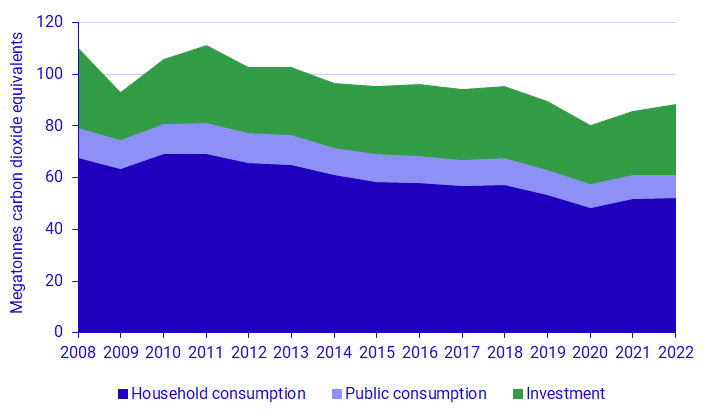
Emissions linked to production of textiles, petroleum products, and metal products, however, rose by 2.6 megatonnes (10.8%)
Imported products contributed significantly to Sweden’s emissions in 2022, with embedded emissions increasing by 4.5 megatonnes (8%).
Emissions linked imports grew most notably from China (13%), the U.S. (18%), and other regions (17%), while emissions from Russia decreased by 0.9 megatonnes (-20%).
Read more about emissions in Sweden here.