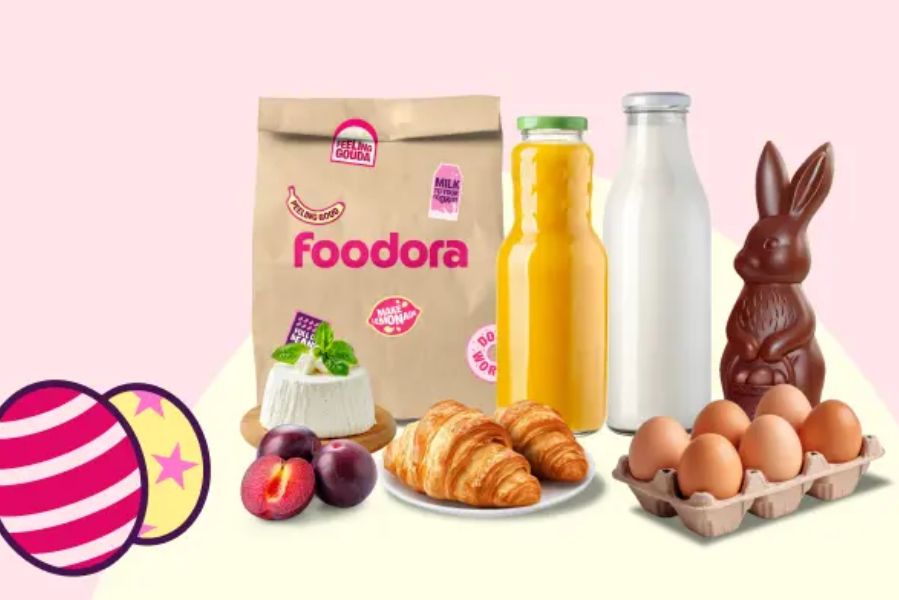
With food delivery services on the rise across Europe, foodora has released its annual Taste Map report, which tracks recent food delivery trends in Austria, Czechia, Hungary, Finland, Norway and Sweden, the six countries in which it has a presence.
As the Taste Map reveals, convenience is ‘no longer just about getting something quick, it’s about social fabric, identity, and changing definitions of comfort’. In addition, the rising influence of suburban families, the growing demand for global cuisine, and the renewed focus on everyday essentials is making delivery a ‘central part’ of people’s lives.
Let’s explore the three trends in more detail:
1. Suburban spend is driving delivery growth
As foodora‘s research reveals, suburbs have overtaken city centers as the areas with the highest delivery spending, with larger households, family-oriented lifestyles, and the presence of fewer dine-out options among the factors driving this growth.
In Budapest, outer districts such as Budafok-Tétény and Rákosmente record spending 12% to 20% higher than the city average, while a similar trend is noticeable in Prague, where the suburbs of Dejvice, Smíchov, and Strašnice lead the way in delivery orders.
Similarly, in Stockholm, Bromma and Skärholmen outpace Södermalm, the southern district of the city centre by as much as 11%, while Helsinki’s suburban districts Pasila, Malmi, and Herttoniemi also exceed the spend of districts closer to the city centre.
2. Comfort food still reigns – but Asian cuisines are gaining more and more traction
In all the countries in which foodora operates, comfort food continues to dominate – with burgers and pizzas a regular purchase – but Asian cuisines are gaining traction.
In Prague, Asian cuisine is now the third-preference option for consumers, ahead of Czech and Italian food, while sushi has become the fastest-growing category in Stockholm and Helsinki, particularly among young professionals. In Oslo, sushi delivery orders increased by nearly 14% in 2024.
3. Delivery of everyday essentials – baskets are back to the basics but bigger
While some categories have seen an increase in spending, such as health products and pet supplies, 2025 has largely seen a return to cupboard staples, with core grocery categories such as dairy, eggs, fruits, and vegetables rising.
“Fast delivery of everyday items, which we call ‘quick commerce’, is no longer just about snacks and last-minute cravings, it’s becoming a part of people’s daily routines,” commented Herbert Haas, chief international officer at foodora. “We’re seeing families turn to q-commerce for their core groceries, with baskets filled with fruits, vegetables, dairy, and other items like personal care. It’s a shift from convenience to consistency, quick commerce is moving deeper into the heart of the home.”
Examples of this are a 15.7% increase in sales of fruit and vegetables in Stockholm, a 68.9% increase in sales of the same category in Oslo, and increased demand for ‘essential’ grocery categories in Budapest and Prague, which have seen two consecutive years of spending rise between 10% and 15%. Read more here.