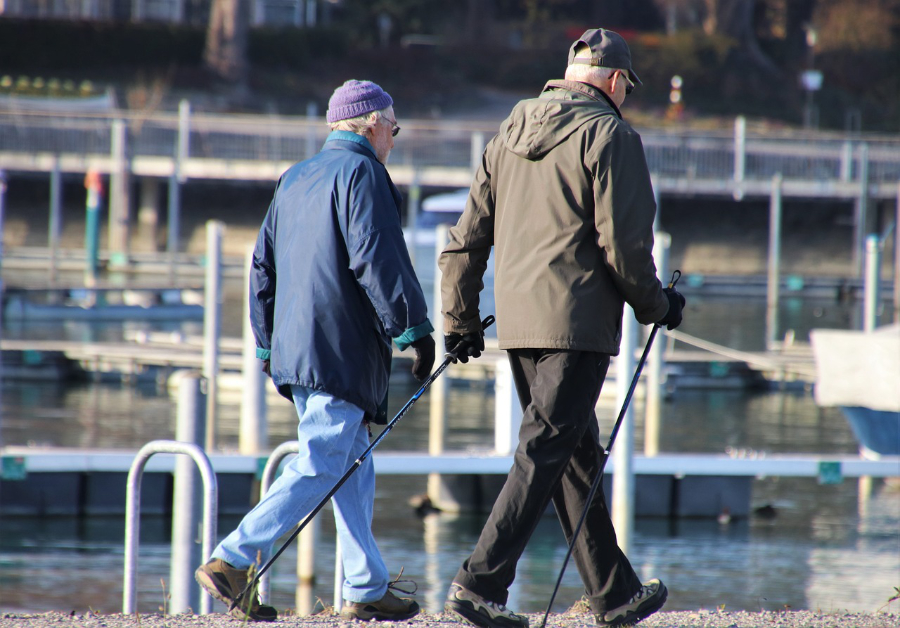
Estonia boasts the highest percentage of individuals that continue working after receiving their old-age pension, with 54.9% remaining in the workforce, new data from Eurostat has found.
According to the data, which covers the year 2023, some 45.4% of Estonians continued to work without any changes to their working environment while 9.5% saw changes, such as changing positions or working fewer hours.
Other countries to see a high proportion of people who continued working include Latvia (44.2%), Lithuania (43.7%) and Sweden (41.7%), while Romania (1.7%), Greece (4.2%), and Spain (4.9%) reported the lowest rates of continued employment.
According to the 2023 EU Labour Force Survey (EU-LFS) data, just 13% of Europeans continued working within six months of receiving their first old-age pension.
The majority either stopped working completely (64.7%), or had exited the workforce before reaching pension age (22.4%), with around half of those that remained working keeping their previous roles, with no changes.
Reasons to keep working
Of those that kept working, more than a third (36.3%) said that they did so due to the enjoyment of work and the desire to remain productive as their primary motivation. Financial necessity was the second most common reason, reported by 28.6% of those surveyed.
Other reasons included maintaining social connections (11.2%) and the financial attractiveness of continued employment (9.1%). A smaller percentage, 3.5%, continued working because their partner was still employed.
On a country-specific basis, the largest proportion of those that kept working because they enjoyed doing so was seen in Denmark, the Netherlands, and Italy.
Financial necessity was the dominant factor in countries such as Cyprus, Romania, and Bulgaria, where over half of retirees who continued working did so to meet financial obligations. Read more here.
Percentage of workers continuing after old-age pension, by EU member state (%)
| Country | Continued Working Without Changes | Continued Working With Changes |
|---|---|---|
| Estonia | 45.4 | 9.5 |
| Latvia | 40.7 | 3.5 |
| Lithuania | 32.9 | 10.8 |
| Cyprus | 22.2 | 7.3 |
| Sweden | 18.5 | 23.2 |
| Czechia | 18.4 | 9.1 |
| Slovakia | 18.3 | 6.4 |
| Ireland | 16.9 | 9.4 |
| Hungary | 13.1 | 7.0 |
| Finland | 11.8 | 16.7 |
| Bulgaria | 9.8 | 6.8 |
| Malta | 9.7 | 8.1 |
| Portugal | 8.4 | 4.8 |
| Netherlands | 8.1 | 9.2 |
| Italy | 6.6 | 2.8 |
| Poland | 6.5 | 6.6 |
| Germany | 6.3 | 6.5 |
| Luxembourg | 5.4 | 4.2 |
| Denmark | 5.0 | 9.7 |
| Slovenia | 4.5 | 3.5 |
| France | 4.3 | 5.5 |
| Austria | 4.3 | 7.9 |
| Belgium | 3.9 | 5.5 |
| Spain | 1.8 | 3.1 |
| Greece | 1.7 | 2.5 |
| Croatia | 1.2 | 3.8 |
| Romania | 0.8 | 0.9 |