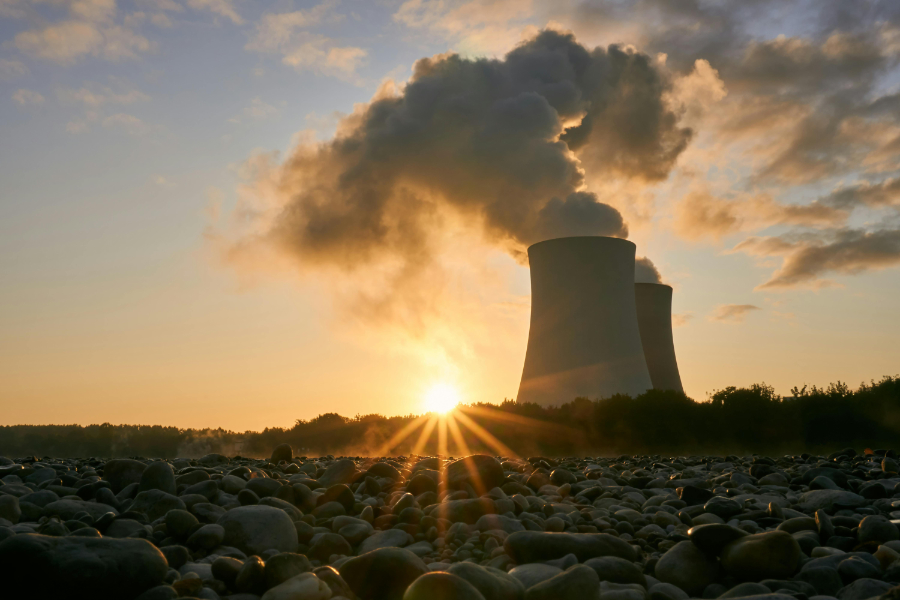
France generated some 54.6% of the total nuclear power in the European Union in 2023, with 338,202 GWh of electricity output, new data from Eurostat has found.
Other countries to report high nuclear power output included Spain, with 56,873 GWh (9.2% of the EU total), Sweden (48,470 GWh; 7.8% of the total) and Finland (34,308 GWh; 5.5% of the total).
Germany, which ceased the production of nuclear power in April 2023, produced 7,216 GWh in the first four months of that year. Prior to its rollback from nuclear, Germany was the second largest producer in the European Union.

Nuclear power in the EU
Overall, across the European Union, some 13 countries generated nuclear power in 2023, in total generating 619,601 gigawatt hours (GWh) of electricity, which was a 1.7% increase compared to 2022.
Nuclear power plants in these 13 countries accounted for 22.8% of the EU’s total electricity production, Eurostat noted.
As regards the countries most reliant on electricity from nuclear sources, France (65%) and Slovakia (62%) led the way, while just 1.4% of electricity produced in Germany and 3.3% in the Netherlands was sourced from nuclear power plants. Read more here.
Electricity Generated from Nuclear Power, by GWh (2023)
| Country | Electricity Generated (GWh) |
|---|---|
| France | 338,202.283 |
| Spain | 56,873.000 |
| Sweden | 48,470.000 |
| Finland | 34,308.000 |
| Belgium | 32,927.900 |
| Czechia | 30,410.464 |
| Slovakia | 18,333.000 |
| Bulgaria | 16,163.276 |
| Hungary | 15,918.000 |
| Romania | 11,191.089 |
| Germany | 7,216.000 |
| Slovenia | 5,603.006 |
| Netherlands | 3,985.293 |