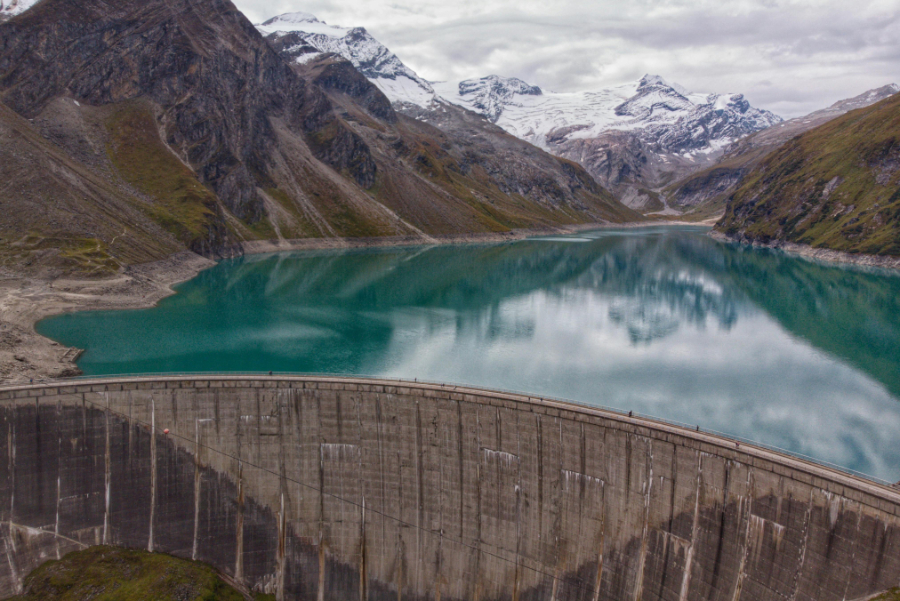
Austria generated 87.8% of its electricity from renewable sources in 2023, the highest percentage in the European Union, new data from Eurostat has found. The majority of this electricity was generated though hydropower.
However, this share is not the highest in Europe as a whole, with Norway generating 116.5% of its electricity from renewable sources – meaning that the country not only generates all its electricity from renewables, but also generates a surplus.
Other EU countries to report a high percentage of electricity generated from renewable sources include Sweden (87.5%), Denmark (79.4%), Portugal (63%), Croatia (58.8%) and Spain (57%).
At the other end of the scale, however, Malta generated just 10.7% of its electricity from renewable sources, followed by Czechia (16.4%), Luxembourg (18%), Hungary (19.5%) and Cyprus (20.1%).
Renewable energy
Overall, in 2023, renewable energy sources supplied 45.3% of the gross electricity consumption in the EU, which was a 4.4% increase on the previous year, Eurostat‘s data found.
Wind (38.5% of the total), hydropower (28.2%), solar (20.5%) and solid biofuels (6.2%) accounted for the majority of the electricity generated by renewables, at European Union level, in 2023. Read more here.
Share of electricity from renewable sources, 2023 (%)
| Country | Renewable Share (%) |
|---|---|
| Norway | 116.538 |
| Austria | 87.764 |
| Sweden | 87.547 |
| Denmark | 79.392 |
| Portugal | 63.010 |
| Croatia | 58.826 |
| Spain | 56.933 |
| Latvia | 54.317 |
| Finland | 52.375 |
| Germany | 52.24 |
| Greece | 48.225 |
| Romania | 47.391 |
| Netherlands | 46.400 |
| Slovenia | 41.887 |
| Ireland | 40.428 |
| Italy | 38.1 |
| Lithuania | 36.469 |
| Estonia | 31.845 |
| Belgium | 31.37 |
| France | 29.981 |
| Bulgaria | 29.426 |
| Poland | 25.793 |
| Slovakia | 24.201 |
| Cyprus | 20.939 |
| Hungary | 19.535 |
| Luxembourg | 18.044 |
| Czechia | 16.448 |
| Malta | 10.740 |