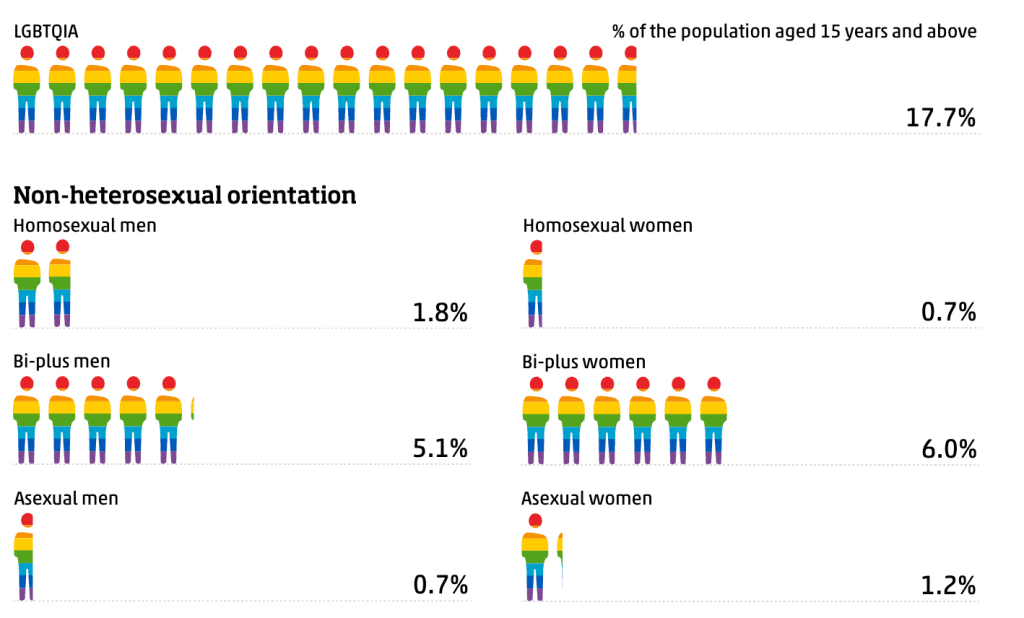
Some 18% of the population of the Netherlands identifies as LGBTQIA (lesbian, gay, bi-plus, transgender, queer, intersex or asexual), equating to around 2.7 million people, new data from Statistics Netherlands (CBS) has found.
The statistics body unveiled the data to coincide with Coming Out Day, which took place on 11 October.
The figures were derived from the Safety Monitor 2023, a CBS study that around 182,000 people took part in.
Behind the numbers
Of the 2.7 million, the highest proportion are those with a bi-plus orientation (people attracted to more than one gender), which encompasses some 1.7 million people.
In addition, the Netherlands has some 272,000 homosexual men and 106,000 homosexual women, while around 151,000 identify as transgender.
Elsewhere, around 45,000 identify as non-binary/gender queer (NBGQ), while an estimated 45,000 are intersex (those born with both male and female sexual characteristics).
LGBTQIA demographics
According to the study, which measured sexual preferences among those aged 15 or over, LGBTQIA people are generally younger, with 19.4% aged between 15 and 24 years, compared to 14.3% in the non-LGBTQIA population. Conversely, fewer LGBTQIA individuals are between the ages of 45 and 64, representing 26.3% of this group, compared to 32.5% of non-LGBTQIA individuals.
The study also found that LGBTQIA people are more likely to live in highly urbanised municipalities, such as cities and large towns, with close to a third (31.4%) residing in such areas, compared to 24.6% of the non-LGBTQIA population.
In terms of geographic origins, 17% of LGBTQIA individuals were born outside the Netherlands, a higher proportion than the 14% of non-LGBTQIA people born abroad. This figure rises to 21% for those identifying as non-binary or gender queer.
Additionally, LGBTQIA people tend to have lower household incomes and less financial wealth than their non-LGBTQIA counterparts. Read more here.