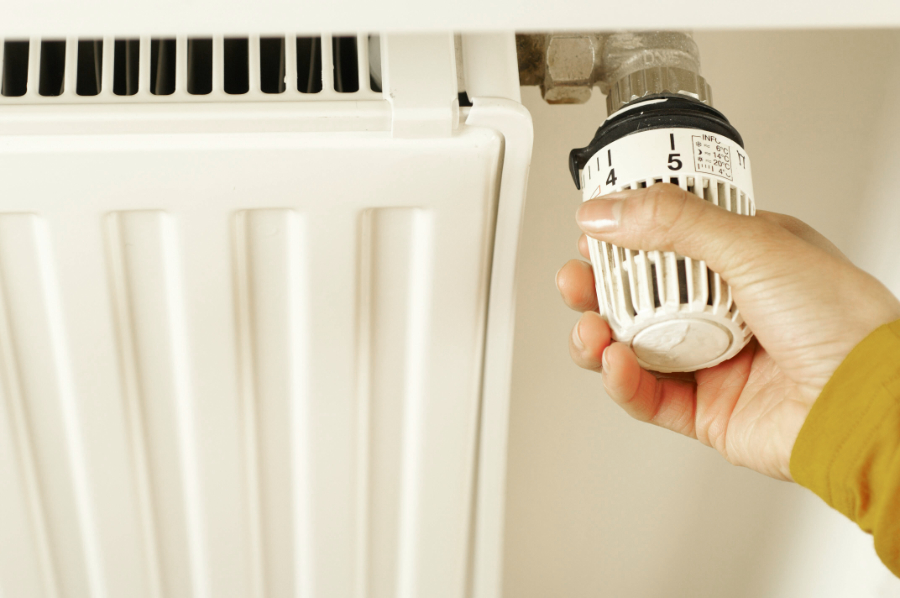
The share of renewable energy used for heating and cooling across the European Union reached 26.7% in 2024, its highest level to date, new data from Eurostat has revealed.
The share increased by 0.5 percentage points compared to the previous year (26.2%), however this increase was lower than the average over the past two decades (0.75 percentage point growth).
The current share of renewable energy used for heating and cooling across the EU is well up on 2004, the year that this data set began, when it stood at 11.7%.
‘In absolute terms, the gross final consumption of renewable energy for heating and cooling purposes in the EU has gradually increased over time, mostly due to the contribution of biomass and heat pumps,’ Eurostat said.
According to EU Directive 2023/2413, which was passed in October 2023, EU member states are required to raise their annual average share of renewables in heating and cooling by at least 0.8 percentage points between 2021 and 2025, and by at least 1.1 percentage points between 2026 and 2030.
Across the EU as a whole, the average increase between 2021 and 2024 stood at 0.93 percentage points.
Sweden leads the way
In terms of the countries that generate the most renewable energy for heating and cooling, Sweden led the way, with close to two thirds (67.8%) of its heating and cooling powered by renewables.
Other countries to report a high share of heating and cooling from renewables included Finland (62.6%) and Latvia (61.8%).
At the other end of the spectrum, Ireland generated just 7.9% of its heating and cooling from renewable resources, followed by the Netherlands (11.3%) and Belgium (11.3%).
Between 2023 and 2024, some 16 EU member states recorded an increase in their share of renewables used for heating and cooling, with Malta leading the way (+6.0 percentage points), Luxembourg (+3.7 percentage points) and Denmark (+1.9 percentage points). The biggest year-on-year declines were recorded in Estonia (-11.1 percentage points), Greece (-2.9 percentage points) and Bulgaria (-1.9 percentage points). Read more here.
Share of Energy from Renewable Sources, 2023 (%)
| Country | Share (%) |
|---|---|
| Belgium | 11.211 |
| Bulgaria | 36.059 |
| Czechia | 27.675 |
| Denmark | 54.503 |
| Germany | 16.909 |
| Estonia | 66.668 |
| Ireland | 7.778 |
| Greece | 35.547 |
| Spain | 21.904 |
| France | 30.182 |
| Croatia | 36.173 |
| Italy | 20.268 |
| Cyprus | 42.896 |
| Latvia | 61.401 |
| Lithuania | 53.611 |
| Luxembourg | 15.388 |
| Hungary | 22.268 |
| Malta | 53.231 |
| Netherlands | 10.359 |
| Austria | 40.770 |
| Poland | 20.610 |
| Portugal | 47.098 |
| Romania | 29.126 |
| Slovenia | 34.302 |
| Slovakia | 18.795 |
| Finland | 61.355 |
| Sweden | 67.068 |